
- Conţinut
Rotational stiffness for bolted column/beam moment bearing connections
Did you know that you could use Consteel to calculate rotational stiffness for bolted column/beam moment bearing connections?
This capability is implemented through the Joint module, where connection behavior is evaluated in accordance with Eurocode EN 1993-1-8. The software does not treat joints as idealized (purely pinned or rigid), but allows the engineer to consider semi-rigid behavior by calculating the actual rotational stiffness based on connection components such as bolts, end plates, welds, and stiffeners.
In practical terms, the rotational stiffness is derived from the component method, where the stiffness contribution of each tension and compression component is taken into account. This enables a more realistic representation of the joint response, especially for moment-resisting beam-to-column connections where stiffness significantly influences global structural behavior.
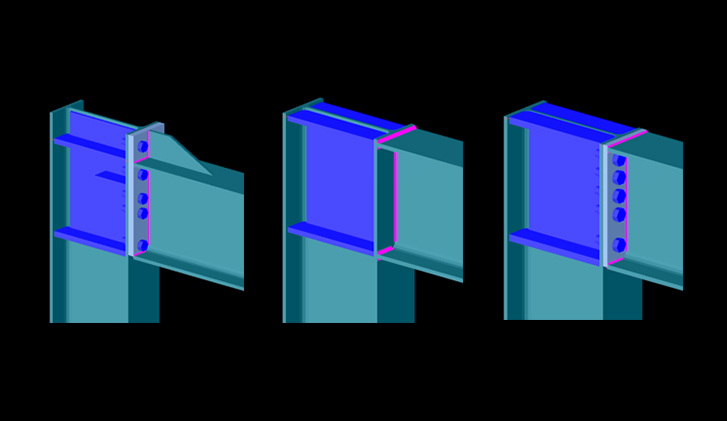
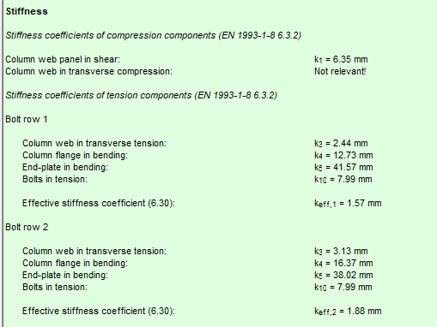
Bolted connection
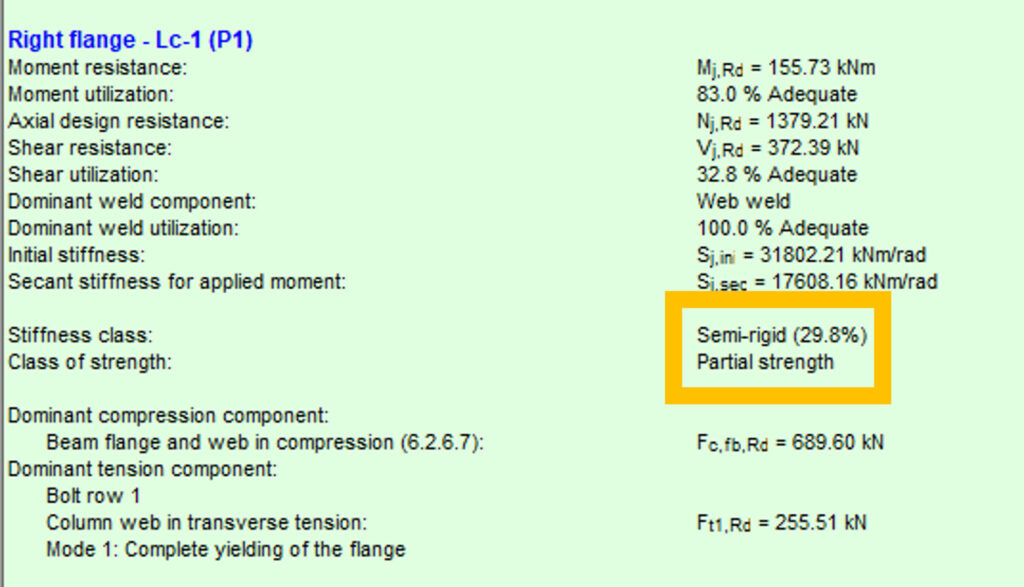
In this case, the connection exhibits relatively low rotational stiffness compared to a fully rigid joint. The flexibility is primarily governed by bolt deformation and end plate bending. Such connections are typically classified as semi-rigid and partial strength. They allow noticeable rotation under moment, which can be beneficial for redistribution of internal forces but must be considered in global analysis.
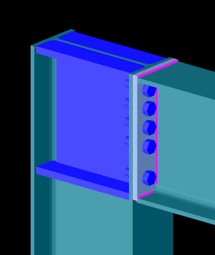
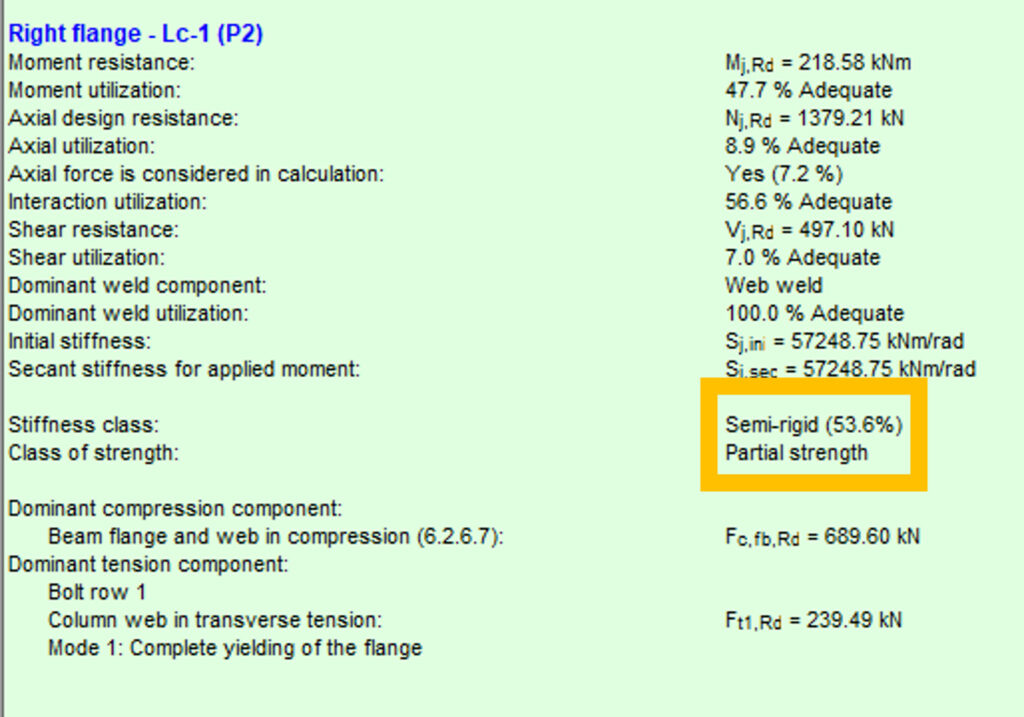
Bolted connection
This configuration shows a higher stiffness due to improved component arrangement, such as thicker end plates, larger bolt diameters, or additional stiffening. Although still semi-rigid, the connection provides significantly more resistance to rotation. This intermediate behavior often results in a more efficient structural system by balancing stiffness and material usage.
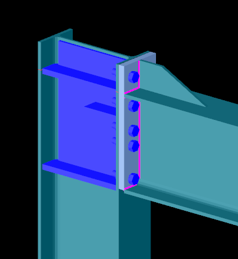
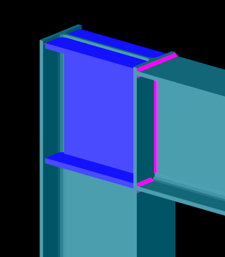
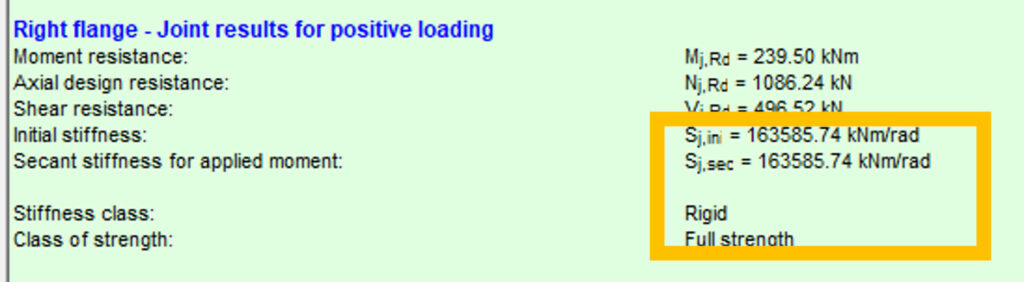
Welded connection
The welded joint behaves as a rigid connection with full strength. Rotational stiffness is high enough that joint deformation has negligible influence on the global structural response. In Consteel, this is reflected by a stiffness value approaching the rigid classification limit defined by the standard. Such connections are typically used where continuity and moment transfer must be ensured without significant rotation.
Using the Joint module, these behaviors can be modeled and evaluated through a structured workflow:
- Joint creation: Define the connection either manually or based on the global structural model using automatic recognition.
- Connection configuration: Assign geometry, cross-sections, bolt layouts, welds, and optional stiffeners.
- Loading definition: Apply either user-defined internal forces or import them directly from the global analysis.
- Analysis: The software evaluates moment resistance, shear resistance, and both initial and secant rotational stiffness using Eurocode-based procedures.
- Integration: The calculated stiffness can be applied back to the global model, enabling second-order effects and realistic force distribution.
Considering rotational stiffness leads to more accurate structural models. Instead of assuming ideal boundary conditions, the engineer can:
- Reduce conservatism in member design
- Capture redistribution effects in frames
- Optimize connection detailing
- Improve overall structural efficiency
This approach is particularly important in steel frames where joint flexibility can significantly affect deflections, internal forces, and stability.
Download the example model and try it!
Download modelIf you haven't tried Consteel yet, request a trial for free!
Try Consteel for free