

With Consteel 20, we continue to expand the possibilities of structural analysis and design, introducing new calculation methods, enhanced stability verification, and more flexible modeling tools. Alongside the first steps towards the second-generation Eurocodes, this release brings improvements to parametric modeling, interoperability, and everyday workflows. From advanced analysis capabilities to practical enhancements, Consteel 20 offers new ways to make structural engineering more efficient and versatile. Let’s take a closer look at what’s new!
The second-generation (2G) Eurocodes are approaching, but as the final standards have not yet been published and National Annexes for the new generation are still largely unavailable, a complete, production-ready implementation is not yet possible.
At Consteel, this transition is part of a two-year development plan. The first year focuses on laying the foundations for supporting design according to standards other than the currently implemented Eurocodes, alongside introducing the first new features based on the 2G EN 1990 and EN 1993. Further developments will be delivered throughout the coming year, completing the planned implementation with Consteel 21. The 2G Eurocode features introduced in Consteel 20 will be available in BETA and are expected to become production-ready with Consteel 21. Subsequent development will address the relevant provisions of EN 1991, EN 1994 and EN 1998.
Beyond these important developments related to the Eurocodes, Consteel 20 introduces a broad range of improvements to steel structure analysis and design, including new calculation capabilities, expanded parametric modelling tools, improved integrations and workflow enhancements. The new version continues to develop Consteel as a comprehensive solution for the analysis, design and modeling of steel structures.
2G EUROCODES (BETA) – FUNDAMENTALS AND PREPARATORY FUNCTIONS
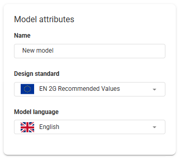
Consteel 20 takes important steps towards implementing the second-generation Eurocodes. Until the complete analysis and design functionality of Consteel exists for the 2G Eurocodes, the new standard implementation is available as BETA.
Optimized and parallelized EC3 Design calculation
The standard design functionalities are fundamentally modernized, reorganized, and refactored to be prepared for the new Eurocode 3 design calculations building also the ability for parallelization to improve computational efficiency.
Automated buckling mode classification (BETA)
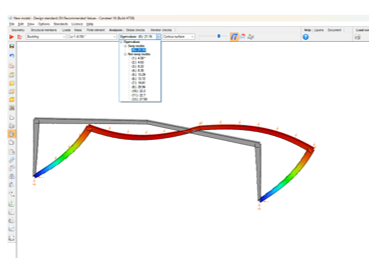
The various design methods recognized by the 2G EN 1993-1-1 require a different handling of different buckling modes. Accordingly, a new buckling analysis post-process is introduced which automatically classifies the buckling modes. First, the sway and non-sway mode shapes are separated (primarily for 2D frames as the basic model of EN 1993-1-1) and the non-sway modes are further classified into the well-known member buckling modes (like strong axis, weak axis, torsional, flexural-torsional, lateral-torsional, coupled flexural etc., buckling modes) connected to different specific buckling curves in the 2G EN 1993-1-1.
Introduction of non-uniform reduction factors (BETA)
The reduction factor-based buckling design has been further developed. First, the software automatically filters out irrelevant in-plane sway buckling modes, retaining only the relevant member buckling modes for the reduction factor-based buckling design process. Furthermore, the relevant buckling mode shape is taken into account when determining the longitudinal decay of the reduction factor, which represents the true buckling effect along the member. This introduces a new alternative to the standard General Method, developed by Consteel, that delivers results very similar to those obtained using a GNIA approach.
2G EUROCODES (BETA) – NEW FUNCTIONS
Elastic-plastic cross-section resistance calculation
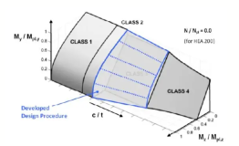
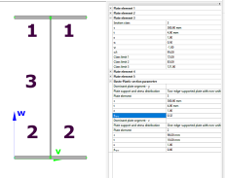
Consteel 20 introduces the design of semi-compact cross-sections in accordance with Annex B of EN 1993-1-1, enabling the calculation of their elastic-plastic resistance when they fall just outside the Class 2 limits.
Updated load combination generation and standard references
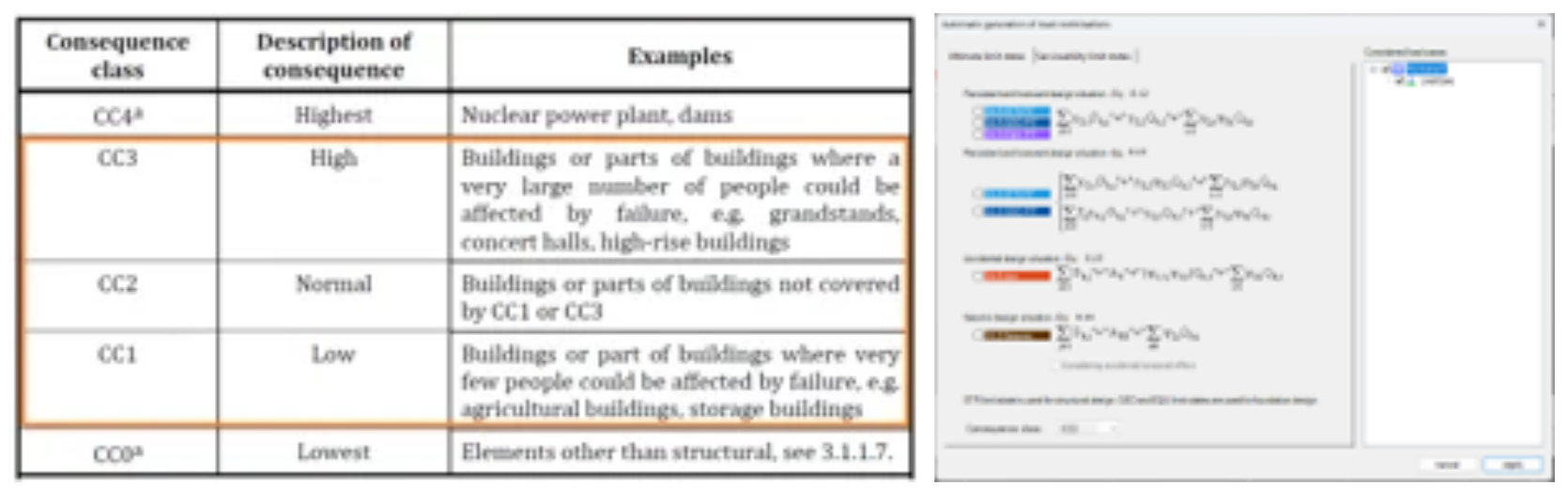
The automatic generation of load combinations now supports the consequence classes defined in the second-generation Eurocodes. The factors corresponding to CC1, CC2 and CC3 classes will automatically be considered. References to Eurocode provisions have also been updated to reflect the new standards.
NEW ANALYSIS AND DESIGN CAPABILITIES
Consistent analysis of model portions
Consteel 20 introduces a new option for defining which members/model portions should be included in the structural analysis of a particular load combination. The consistency ensures that the specific results (for any type of analysis) are interpreted on the same analysis/FE model compiled for the complete global structural model. This capability has several use cases, especially regarding stability and bracing issues:
- It can facilitate the creation of imperfection shapes for bracing design, allowing engineers to define analysis conditions tailored to the design of the bracing system, i.e., calculating the buckling modes (imperfection shapes) for the model portion excluding the bracing system.
- A simplified and efficient construction stage analysis can be executed for structural models including temporary bracing elements and/or supports/restraints, which are gradually eliminated from the final analysis
- In secondary members (purlins) or sheeting can be neglected from load combinations connecting to certain design situations (like in fire design situation).
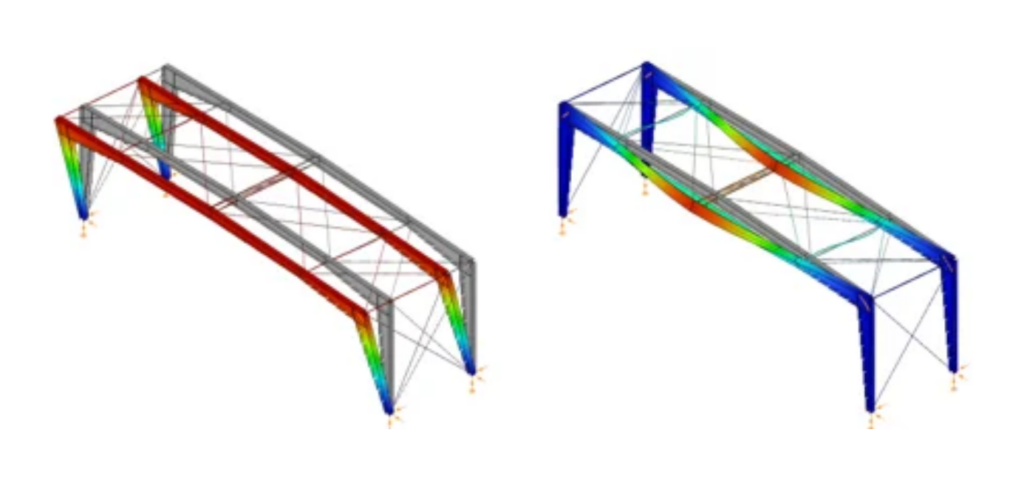
New TRUSS finite element
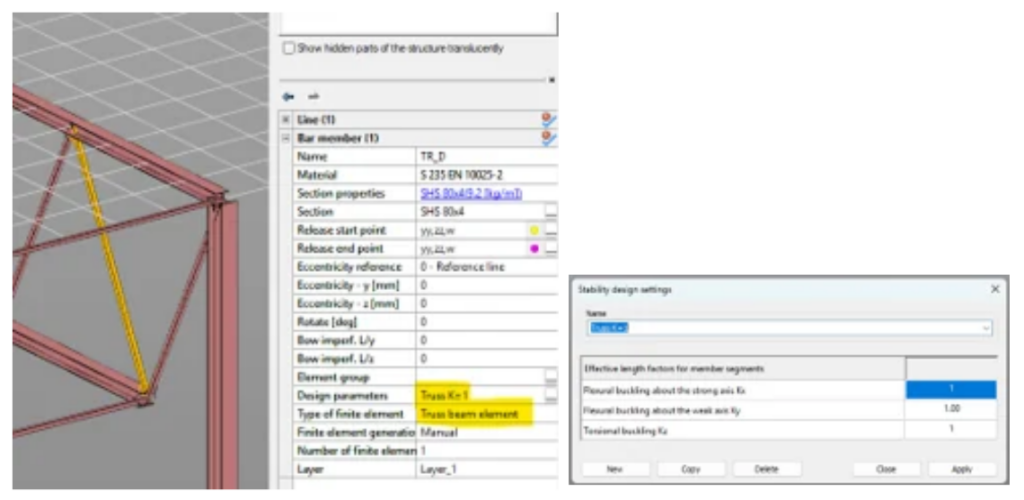
A new TRUSS finite element type is introduced for the analysis of trusses and bracing members. It efficiently addresses a common challenge in truss design: handling large number of elastic eigenmodes with low eigenvalues, without the need to define model portions. The element also enables integrated flexural buckling design according to EN 1993-1-1, based on analytical equations, as an alternative to the General Method-based approach, for pinned-pinned boundary conditions.
Stability verification of solid round bars
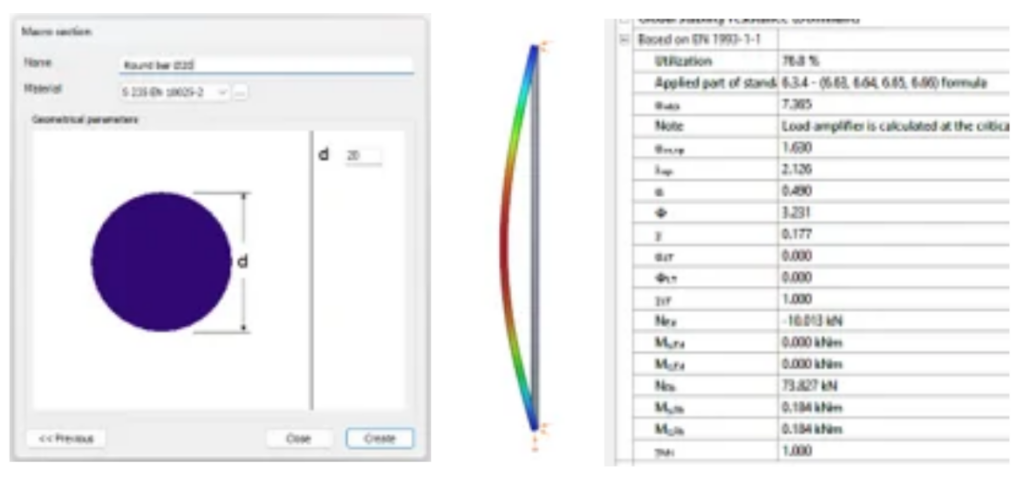
Historically in Consteel, solid round bars have been used as tension-only members. Consteel 20 introduces stability verification for members made of solid round bars according to EN 1993-1-1, extending the available design capabilities to this type of structural element.
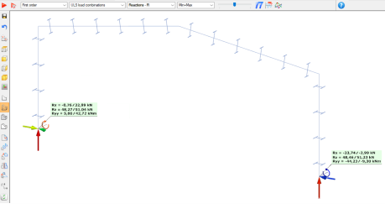
Reaction force envelope diagrams
Reaction force envelope diagrams provide an overview of the extreme support reactions resulting from the analyzed load combinations, helping engineers identify the governing support forces for foundation design. This long-awaited functionality finally arrives in Consteel 20.
EXPANDED PARAMERTIC MODELING
Consteel 20 introduces additional parametric modeling capabilities in Project Center. A wider range of structural model configurations can be modeled and manipulated efficiently.
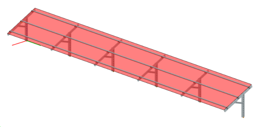
Photovoltaic support structures
New parametric models allow engineers to create complete photovoltaic support structure models, simplifying the configuration of these increasingly relevant steel structures.
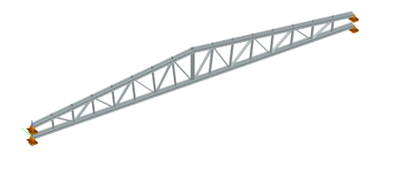
Cold-formed steel trusses
Parametric models for cold-formed steel trusses facilitate the configuration of modular structural systems, providing an efficient starting point for modeling these structures.
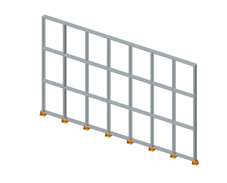
Cold-formed wall panels
New parametric models support the efficient modelling of cold-formed wall systems, including studs, bottom tracks, and top tracks.
New Descripts in the library
End-wall parapet
A new Descript helps engineers create typical post and parapet components for the end walls of steel halls, covering both load-bearing connections that transfer compressive support forces and sliding connections with slotted holes that accommodate beam deflection.
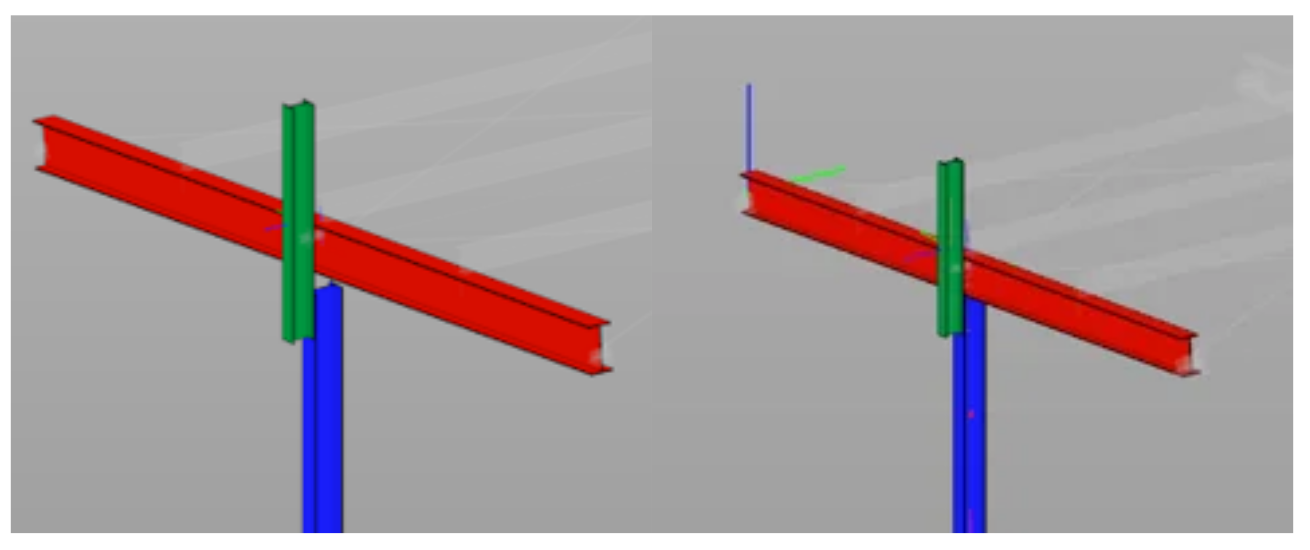
Flange brace installation
A new Descript helps engineers create a flange brace between the main beam and the purlin.
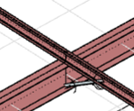
Crane runway brackets
New Descripts support the modeling and detailing of crane runway bracket arrangements.
Member and surface extrusion for FALCON simulations
New member extrusion tools generate bounding load-transfer surfaces around structural members for FALCON simulations. Additional surface extrusion tools generate the bounding boxes required around planar elements. Together, these capabilities facilitate the preparation of structural models for CFD-based wind load simulation.
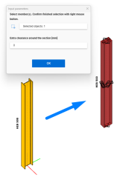
Snow load evaluation for multi-span roofs
A new Descript evaluates snow loads on multi-span roofs in accordance with EN 1991-1-3, Section 5.3.4.
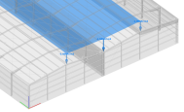
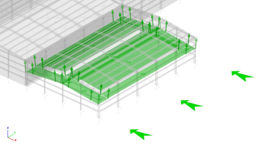
Wind load evaluation for duo-pitch canopy roofs
A new Descript evaluates wind loads on duo-pitch canopy roofs in accordance with EN 1991-1-4, Section 7.3.
IMPROVED INTEROPERABILITY AND USER EXPERIENCE
Enhanced Smart Link functionality
The Smart Link functionality has been extended with options for handling rotated cross-sections and the direction of member eccentricities. These improvements provide greater control over the transfer of structural model data and help maintain the intended member orientation and eccentricity definitions.
French-language user interface
Consteel 20 introduces a French-language user interface, making the software accessible to a broader range of French-speaking users.

Updated software integrations
Compatibility has been updated for IDEA StatiCa Connection 26 and Tekla Structures 2026, supporting continued cooperation with these external engineering tools.

WORKSFLOW AND EFFICIENCY IMPROVEMENTS
- More detailed analysis error information: When an analysis fails, Consteel provides more detailed information to help users identify and resolve the problem.
- New predefined support type: A new zz,w-type predefined support is available for defining support conditions.
- Improved Copy functionality: Safeguards help prevent unintended duplicate copies when using the Copy function.
- Online user administration: User administration is available online, simplifying the management of users.
- Subscription information in the personal account: Users can track subscription-related information through their personal account.
SUMMARY
Consteel 20 combines preparation for the second-generation Eurocodes with practical improvements across structural analysis, stability design, parametric modeling, interoperability, and everyday workflows. From the new TRUSS finite element and expanded Descript library to enhanced Smart Link functionality and updated software integrations, the new version provides engineers with a broader set of tools for handling diverse steel structure design challenges. Further developments planned for January will continue this progress with additional capabilities for sandwich panels, national-standard support, and cladding restraint modeling.
Feel free to try it or request a quotation at info@consteelsoftware.com.